Episode Transcript
[00:00:00] Speaker A: Welcome to the Independence by Design podcast, where we discuss what it means to be a business owner and ways to get unstuck from the day to day so we can design a business that gives us a life of independence.
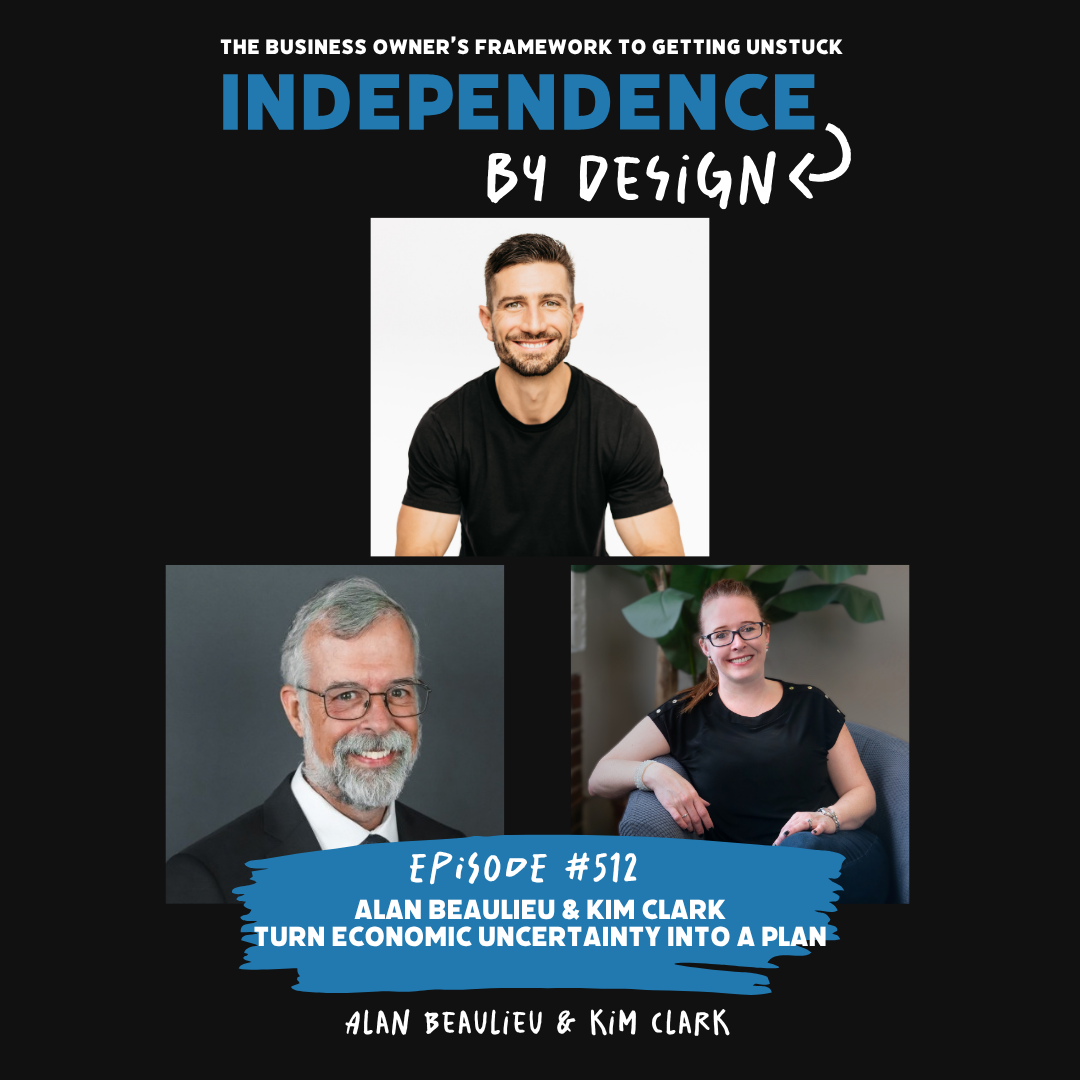
[00:00:13] Speaker B: Brian. Dad. Excited to dive into today's conversation. Dad, thanks for joining us. Looking forward to talking economics, but also just like, what the heck is going on in the world around us? I just, I see so many news headlines everywhere and I talk about it with my friends, probably at nauseum, to the point where they don't want to talk to me anymore.
And so then I call Ryan and he and I can talk about it for hours, which works out well.
So just looking forward to having this conversation so we can share some of what's going through all of our heads with people that tune into the podcast. So, Ryan, I don't know if there's anything you want to add to that or not.
[00:00:48] Speaker A: No, I'm excited, Al. Like, you and I were talking about, like I.
In the per. Pursuit of truth of like, so what to your point, before we hit the record button, like, we're all talking to business owners. Us three are going to be at the IBD summit in a couple weeks.
We have to navigate these choppy waters. Alan, you and I both sit on board, on boards, and it's all about the future. How do we navigate the future? How do we make it practical? How do we sit through all the propaganda? So, yeah, I'm excited just to, to unpack. What should we be paying attention to and why?
[00:01:15] Speaker C: Okay, yeah, I, I appreciate that. And there is a lot going on and it's, it's. Sometimes it's easy to get caught in a headline and, and you get distracted by that. But there are some headlines that are worth paying attention to.
Retail sales number just came out and it was a good, healthy number.
And the headline says, you know, consumers are resilient and they're confident and, and all the rest of that. But then if you read far enough down, it says this is not an inflation adjusted number. I'm going, well, let's put a big red X on that one.
[00:01:52] Speaker A: I got to read this. This post that I saw this morning that I think is tied into that is.
Here we go. We got anthropic says it would be profitable if you didn't count the expenses.
Like la La land.
Oh my God, whatever.
[00:02:18] Speaker C: That's, that's truly funny.
[00:02:20] Speaker A: Well, so, okay, I think to frame this all up, Alan, I'm curious, like, what you're paying attention because it's Like I was texting Pat Hobby back and forth because I sent him that. And I said, apparently you and I missed the single entry accounting class that everyone took while you and I were in the double entry accounting class.
Like, what is going on?
[00:02:43] Speaker C: Yeah, well, that, that's so very true.
And that's one of the things I, I hope we get to talk about for a few minutes today is AI and, and I want to roll in China, but I think a broader brush at the moment would be 10 year bond yields.
Today they're at 5.08% and there's so much being written about that I almost hesitate to talk about it. But as I listen to other people and some people shrug it off and go, well, Besset will take care of it and others, the venture market will take care of it. And.
But the reality is anybody, in my opinion, that wants to know what's going on got to pay attention to the bond market and what's driving it. Why are rates going up?
And the reason is multifactorial. So when they look in one area and say it's because the United States is trying to accomplish this, that's ignoring a large part of the bond market. And bond yields are going up in most countries.
And as they're going up in most countries, that tells us something, that there is something global going on that we need to be paying attention to. Why do we care?
At the moment? We don't. I don't care that they're 5.08, I don't care if they get to 5.59, I don't care when they get to 6%.
And I don't know what the magic number is. But if we see them just slowly going up over the next three years, we're going to reach a point where the egg cracks and we're done. We're into that depression and people like to ask what's the magic number? And the answer is there is no magic number. It's when the bond market decides this is nuts. The United States debt, Japan's debt, China's debt. China is a huge debtor nation. People don't pay attention to that.
France's debt, Italy's got the largest debt to GDP of any nation. You know, major nation on the planet. You know, all this is causing people to go. You guys don't seem to know how to put the brakes on this. I can get more money by going into commercial credit at the moment. I can get more money elsewhere. So I demand a higher rate of interest if I'm going to be inflation protected.
And that leads us to, okay, is inflation going to recede? And my unequivocal answer is no chance.
No chance inflation is going to recede. We might find some disinflation, which is a slowing in the rate of rise, but no deflation, which is prices coming down. I actually think in the next three years we'll see inflation begin to pick up again in 27.
And we're going to and be dealing with the consequences of that and the impact on businesses. So the so what is all right. Warsh is speaking this afternoon.
President Trump wants him to lower rates wash. It's hard to tell what he wants to do because he's a dovish hawk. And then he may at the end of the day, raise interest rates 25 basis points. So I want everybody to know that we're talking today before it happens. Right?
[00:05:40] Speaker A: Exactly. Caveat.
[00:05:41] Speaker C: That's right. If it goes up 25 basis points, I don't care. It means nothing. It's symbolic. It's when it goes up 25, 25, 50, 25 stops for a couple. I mean, that's what you want to watch is the trend. It's all about the trend. So if watch goes up 25 basis points, go, I should have put that on the betting app and I would have won some money. You know, pay any more attention to it than that.
Now, part of all that though, beneath the surface, so we're going beyond the bond yields and what Warsh does with the fed funds rate is that it looks like mortgage rates are going to be going up and going to 7%. So in an already sluggish market where prices are going up very fast, faster than people's incomes, all of a sudden a mortgage rate is going to go from six and a half to seven percent.
That's a big deal. That's a so what?
Because that's a major part of the economy. And it means that there's a whole generation of people who are going, I can't afford whatever the American dream used to be. I don't even know what it is anymore. Then I'm denied that. And I'm a renter for life.
What's the problem with that, Alan, is that most people gain equity in life because it's the equity in their home. So all of a sudden, there's a large part of a most populous generation we have who are not going to be able to gain equity that will help them as they get older.
What's the so what to that? It means that they are going to be voting to change things in their favor.
And things will be changing.
[00:07:10] Speaker A: I'm just starting to see that. Oliver.
[00:07:12] Speaker C: Yeah. When will it occur?
Next decade. Does it matter to me? No. Why doesn't it matter to me? I'm going to die late next decade, so it doesn't matter. The actuarial tables are pretty clear.
I got a countdown birthday cake, Kim. Seen it. Every year I take a candle out and we just.
[00:07:28] Speaker A: I gotta get you that poster that I've got up on my wall.
You would have a lot of those boxes filled out apparently.
Depends on what you give yourself for the total timeline.
[00:07:39] Speaker C: So first takeaway then is watch the bond market. It'll tell you whether they're expecting inflation. Those are intelligent people and what they're willing to tolerate. Watch the global bond market tells you what the world's going through. And what we're seeing is that there's going to be some global inflation. So plan your business around inflationary increases. Do I care whether it comes or whether it comes from diesel fuel or whether it comes from cotton prices or rare earth?
Only if I'm an investor. But as I run my business, I just have no, inflation's coming. So I, then I go to Kim and go, kim, I need to raise my prices. Can I raise my prices? How much? And what's the message that I give when I raise my prices? Because the worst message in the world is my costs have gone up, therefore I have to pass along my cost to you. And I go, you are truly stupid for saying that out loud.
You gotta find a better way.
[00:08:28] Speaker A: Alan, have I told you about the, the image that I got, I screenshotted about my protein. So this protein I've been buying for a long time, it was $62 and it's now 1:26.
And we, I asked them what the f happened and they're like, we thought it was transitory and we were wrong. So now it's 125. And I was like, oh, that was well, well served. Like eat it or not. It's up to you.
[00:08:56] Speaker C: Yeah, yeah. Well, they probably would rather ship less and make more. So, you know, that's not a bad thing.
So as, as business owners, is there capital available now and you have a project going in the future? You might want to get a, a loan now because it's only going to cost you more in the future. But be careful of the three year window when you gotta perhaps deal with cash flow issues as you head into a slower growth or a downturn in the economy while you Own a lot of debt.
My advice is you better make sure that's a short ROI on the reason you're buying that piece of equipment. Three year roi. You want a new factory, think about that one, you know, that sort of thing.
I think that's the most important issue of the day is three year planning with debt rising. And that'll mean different cost of debt, you're saying.
[00:09:44] Speaker A: Yep, yep.
I wanted to give. And I think that makes sense. And I like, you know, keeping us on track of like the. So what. Because I, you know, before I even continue, I think Alan, like you and I are like in lockstep of like in Kim, we talk about all the time, like I think being a business owner of looking at your revenue, looking at your margins, holding your margins through the rate of change on your cost of goods. Kim, Kim and I did that workshop, Alan, about like how do we track the rate of change on our cost of goods so we can maintain the margins to figure out how to have that pricing increase strategy that becomes the, the arc or the, the thing that's, you know, the surfboard of the, of the wave of inflation.
I want to zoom out even a little bit further and just kind of give you my frame of reference of how I'm, how I've, my mental model and how I'm thinking about all of this stuff.
And we started out because I want to know if I'm thinking about this in a, in a, in a. I want to know how, how you think about my mental model right now.
So in the lens, how do you feel about it?
[00:10:46] Speaker C: I feel like I can be a therapist at this point. How do you feel about this?
[00:10:50] Speaker A: I feel like the snake is eating its tail and there's literally no way out.
[00:10:56] Speaker C: Yep, okay.
[00:10:57] Speaker A: Yep. And I think that people are thinking linearly and I think that is the wrong mental model. I think this is a not. I think we're in for a non linear event.
And for probability and statisticians who are talking about, well, there's only a 1% chance, but like Nassim Taleb talks about, if the 1% chance collapses the entire thing, you're not weighting your probability and understanding how to plan against that 1% that's non linear, that collapses the entire thing and there's the whole gradually then suddenly, which there's a lot of books around that which is effectively the non linear event. And the way I think about it. So the feeling is, I feel like we're all in a movie theater and they call it the Pavilion Bell, which Is like, when does everybody wake up?
And like if we're in a movie theater and there's smoke going on and like I say, hey Kim, like let's, let's walk to the door cuz shit's going to go down like, and we're walking and like let's not let everybody see we're running because if they see we're running, they're going to shoot us and crawl over our dead body so they can get out.
And the moment that people realize we're speed walking now the closer we get to the door, we more we speed walk and the more everybody goes, holy, they're going, they look, there's smoke. And that's a nonlinear event in my mind.
And what I look at and I can give a bunch of examples that I are headlines that I'm following that is helping me understand the rate of change of people's awareness of the smoke, which then helps me better understand the rate of change of the nonlinear event becoming more probable and increasing the probability of a nonlinear event. Because a snake is eating its tail. And what I mean by that is like I was joking around with Pat because like I'm like, like the fact that he's now talking about it, it's like double entry accounting.
Like the US Government and the more specifically the Federal Reserve. I know they're different and we can talk about that, but they're the only ones that do single entry accounting.
They print money out of their butt. And the whole like the whole economy as of right now, according to the stats, it's around 79% of the entire economy is debt refinancing.
So this whole like cash flow game that we talk about all the time, which we are, we have like double entry accounting, which is cash flow because you're creating value for people that buy your value is a game that we are all subjective to subject to. And then we look at the. So the, when I look at what does this mean to me? And as. And, and I don't even know if I'm finding the right words. But what I've gathered and why I think the snake eating the tail is the best analogy for me is because double entry accounting, when I look at the sixth grade math of double entry accounting go, okay, well right now we either save the bond market, which what do I mean by that? It's like, well Kim, if you lent a million dollars to the US government at 4%, you want the purchasing power of that million dollars plus your 4% back.
That's what you. That was the agreement that you had when you lend money to someone that you think you're going to get the right purchasing power plus the risk back, which is technically the risk free rate that prices the foundation of all assets across the world.
So save the bond market means we have to and we can go and where my mind goes and I got a whole list of like, what does that mean? And what are the lenses of saving the bond market? Well, the other side of that is or save the currency, which is the medium of exchange.
And what I do with my. And I've got a list that I'm looking at here with a huge list of like, if we save the bond market, all of these things have to be true. And if all of these things have to be true, it collapses the currency. But if we save the currency and all of these things have to be true, it collapses the bond market.
And then so what happens is it's this perpetual circle reference with people that are spreadsheet junkies. It's like we're in this and because it's single entry accounting, so the more we lend and like the way I think about it from a cash flow statement from the government and like a very practical example of this is we spend 7 trillion, we make 5, that's a $2 trillion deficit.
We have to fund that.
So if we fund that deficit and we're gobbling up debt and the interest rates go up, it blows that out and it increases the 2 to 3 to 4 and then all of a sudden we're eating its tail. So if we increase rates, that explodes upwards, but if we decrease the rates, the inflation explodes upwards. So we either save the bond market or save the currency. And what, what are the data points that I'm watching is the UAE tried to sell their saving the, the bonds to buy oil, Japan is trying to sell to buy oil because we increase their lifestyle. So they're trying to sell. And Basset in whatever propaganda he says it, how about you don't sell that because the Ponzi scheme is being kind of found out here, here's your margin loan, your swap line.
So and like all of a sudden the insurance companies who would rather buy a Treasury at 5.1% versus the private credit market, that's also the same.
So there's this whole like every single time, Alan, I get into this, like what, what is the, the deductive reasoning behind it? It's like, well, it's either save the bond market or save the currency because it's double entry accounting.
And so I agree with you, like to the normal American, it's like, well my mortgage is now 7.1% and that sucks. And we're going to vote people in that are going to give me more free.
And so the so and that's Ray Dalio. Ray Dalio's got this entire framework where he says by the time this long term debt cycle happens, where the snake's eating its tail, everyone goes, I want more stuff. It's not working for me, give me more stuff. And right now it's like this, it's called the Horseshoe theory. In politics, Trump wants to own privately held companies and so does Bernie Sanders and AOC and Elizabeth Warren's like they're the same thing.
And so I sit here and go, oh my God, like what the hell? And I, and I go back to the so what?
I believe the way my mind is going, it's like they're not going to default on, they're going to print money.
And do they need the political coverage to do that? Probably.
Energy crisis, AI debt bubble, Japan crisis. I mean, what, what Pick, pick from the order of the crisis that you want to give you the COVID to print, otherwise we have to default. Am I like, what's your thoughts on, like me just because I end up spinning in circles and then I try to go to the so what, maybe I need to stop thinking about this stuff and just talk about like strategies of increasing prices for our clients.
[00:17:44] Speaker C: Well, on a daily basis that's where it starts, is, you know, how the client keep cash flow going. But to answer your question, I'm going to answer it this way.
There are people like Besset and, and others who actually believe they can balance the two so the snake's not eating his tail because they can, they can keep the snake and, and the demand and everything in balance and own the market and, and control the market.
[00:18:12] Speaker A: The US Military backs the dollar and
[00:18:15] Speaker C: people want to believe that. They want to believe that there is a facet, that there's a Trump, that there are people out there who can protect them and make this safe because people by nature are linear thinkers. And it hasn't been so bad so far in the last 10 years. You know, we've had our ups and downs, but overall, you know, not a lot to complain about, which by the way is not true, but that's how people think.
[00:18:35] Speaker A: But the bond markets, the real return on bonds has been the worst in 250 years though, right? So it's not actually true, but all
[00:18:43] Speaker C: they think about is the 4%. I'm making 4% on their money.
They really don't, they don't think about the, the inflation and the value of the dollar and all the rest of that stuff. And that makes it easy for politicians to sell a story.
And that's to your point where it comes upon us very slowly until all of a sudden it's here. It's because we have bought the story and, and that will continue until it doesn't. One of the things that I always used to get asked is what's going to be the event that causes this thing to fall apart. I go, I have no idea. That's why I keep my head on a swivel. I keep, you know, keep looking around and it'll probably be three or four things coming at the same time.
And I personally think China is something that needs to be watched very closely. I can direct our attention over there a little bit. This might.
[00:19:31] Speaker A: What are you paying attention as it relates to China?
[00:19:33] Speaker C: Yeah, I, I, I think the problems that we're talking about don't begin here. I think they begin in China. China owns a second largest foreign holder of U.S. bonds. That gives them the ability to crash the dollar when they want. Okay, that's, they don't need a lot of aircraft carriers. They have bonds.
[00:19:51] Speaker A: Well, they make our aircraft carriers, so they have both. But we can talk about that later.
[00:19:57] Speaker C: And China is going to get desperate.
They're going to get desperate because they have a declining population. They're going to get desperate because as the global economy slows, less people are going to be buying their stuff that are made in factories that are augmented by AI.
AI does not pay taxes. AI does not consume anything. So their internal economy is going to slow down. As a global economy slows down, all of a sudden you have a desperate economy. That is their debt to GDP depends on who you source it from. The IMS has them at 99% debt to GDP really high. And people don't talk about it because their interest rate's so low at 1.4%.
And as Luke and Lynn just pointed out, that's because they were experiencing deflation.
I heard that and I went, well, you got to stop there, folks, and talk about deflation because deflation wrecks economies.
You don't say, oh, good, prices are coming down. When prices are coming down, all those companies that are selling stuff are going, oh, crap, you know, I have to sell it for less next month. I have to sell it for next, less next month. And I have to sell it for less. And people stop buying because they go, you know what? I really would like a new car but if I wait two months it'll be cheaper. I'm just going to wait two months. And then you know, you get this build on effect where things slow down because of deflation. So it sounds like it's a good thing when prices come down to people. It actually ends up being worse for an economy than inflation.
[00:21:25] Speaker A: The one, okay, so I, I, I agree in the context of we live in a fiat pyramid scheme that has to by mathematical definition accelerate to centralization and control.
But in a truly free market productivity, the whole hype about AI is it makes things more productive. More productive means things are cheaper. Like I think about what Kim and I are doing, like what we just created for one of our Clients was a $40,000 Sim deck that any investment banker couldn't have waved a stick at.
So like that's good for people.
And so like I think about it is like, and the way I think about this track is like it's the centralization and control and inflation that accelerates versus decentralization and a free market. And we've never really lived in a free market because we've got a, someone that controls the money supply with single entry accounting. So it depends on what, what frame of reference. I think that we're thinking about deflation in if it's to protect the system of the pyramid scheme which I'm not suggesting we should collapse tomorrow. I'm just saying like it depends on like what it is. And if gold goes up because China has made it illegal to buy bitcoin, they have deflated their real estate market and encouraged all of their citizens to buy gold and they've bought more gold than anybody.
And if we actually priced gold out at 25 grand an ounce, their surplus would be gone, their citizens would be rich and we could get back to reshoring our industrial base and we could actually rebuy all of the long end of the bonds. So we could do that whole treasury general account like where you could take the $42,042 an ounce on our balance sheet. Scott Besson, without talking to anybody could revalue all of that gold which if it's 850 tons at every four grand is another trillion dollars. So if it gets up to 25, 20 to 25, 20 to 30 grand an ounce, he could buy out all of the long end of the tail, long tail of the debt and then we could actually go back to then 60 to 70% debt to GDP and then we could actually afford to reshore.
And so I guess my point is, is like, it depends on like, I'm curious on how you think about that because like China said, hey, real estate is for living in, not for speculation.
Which, I mean, I don't know, it seems sensical. And I'm not saying they don't have their problems, but like, I'm trying to think about how it depends on what frame of reference I think we have. Right.
[00:24:00] Speaker C: Yeah. And as, as usual, Ryan, when you talk, four thoughts come into my head and I don't write them all down, so.
[00:24:08] Speaker A: Well, at least you have only four. I,
[00:24:12] Speaker B: last time it was like nine to 11. So could be you're catching up.
[00:24:19] Speaker C: It could very well be.
Okay, let's, let's go back to deflation and keep it simple.
Okay. You're talking systemically. I want to keep it simple for a moment, then I want to get the productivity and, and, and then we'll go from there.
Deflation. I'm a farmer and I, and I sell wheat and the price of wheat goes from $10 a bushel to $8 a bushel to $6 a bushel because I've increased productivity or because there's more of it grown. How long can I stay in business as a farmer if I have a mortgage and I have to pay for the machinery and I have to, you know, take care of my, my family. Unless all the prices around me are going down at the same time, and if, unless all the prices are going down at the same time at the same rate, I'm screwed as a farmer, so.
[00:25:08] Speaker A: Understood. Yeah, because like you're either in that system and everything has to be. Well, that's why like when I look at like the chart of all of the interest rates of all of the western world going up versus China's is going down is because of the underlying. What's the denominator of the met unit of account.
[00:25:28] Speaker C: And unless it's system wide, people get screwed along the way and hurt. So it, you can say, you can make a case that an economy can go for a while that way, but along the way people are getting hurt. As people get hurt, they can react in, in.
[00:25:44] Speaker A: Well, how is that any different than right now? If, if worse and best, if worse increases rates and the boomers who have most of the money become more rich, they are more, they have more spending power and inflation picks up.
So like what ends up happening? That's why I literally go back to the snake eating its tail because every single time it all bounces into the Same thing of, like, okay, well, all of the people that, I mean, you look at the purchasing power that the. The younger generation has that doesn't have the assets, because if you don't have assets, you don't get to ride the wave of inflation in the money printer. So if you're stuck in labor, like, there's no mathematical way to retire with your labor, like, anymore. And so those people are getting crushed. Like, my wife's. The people that work with my wife. Like, no one, no one's planning on getting married. No one's planning on buying houses or cars because they literally can't afford it on 80 grand. Like, the math is so screwed. And so those people are pissed.
[00:26:40] Speaker C: Yeah.
[00:26:40] Speaker A: So, like, who, like who. Who is the person that should be getting the free lunch? I guess.
[00:26:47] Speaker C: Well, nobody should get a free lunch.
[00:26:50] Speaker A: I agree with that.
[00:26:51] Speaker C: And you made a statement going to disagree with, and I hear it a lot. The boomers understand that most boomers barely get by, and they. And there are millions and millions of boomers who live on Social Security without Social Security. They're living with their. With their kids.
And I hear about this massive transfer of wealth. This massive transfer of wealth is very defined. It's in thin beams of light that come down because you have some very rich boomers that are going to leave it for their kids. Don't get your hopes up, Kim. And then we're going to find.
And. But you're going to find that most boomers, what they leave behind for their, for their kids is, you know, here's my chair. I hope you like it.
[00:27:31] Speaker A: You know, it's mainly the house equity. And I, And I, And I appreciate you course, correcting me on that because it was too much of a heuristic or generalization. And when we. And that's why I think looking at where the wealth is concentrated, it is. It's a huge. It's a spectrum and there's a bell curve within the 1%, and it's the whole, like, the whole. What do you call it? The.
Where the one. You know, it's.
What do you call it? The 80, 20 and then the 20, 80 and whatever the hell that that phrase is called. So it's not just older generations, but at my point is with then whatever you're doing, who is trying not to get hurt.
[00:28:12] Speaker C: Yeah. And those truly rich people have lots of power, be they boomers or not. And so it's the power people with power.
I, My wife and I, Don and I have been watching a TV show we really like it's called Murders in the Building with Steve Martin, Martin Short, and Celia Gomez. Cecilia Celia Gomez. And in the last season, I'm going to shortcut this so I don't bore everybody. But watch the show. It is a lot of fun and we laugh a lot.
[00:28:42] Speaker A: Murder in the building.
[00:28:43] Speaker C: Murders plural, in the building.
I think you'd really like it. And what they, what, what they discovered in last night's episode was that there is no more Mafia because they. And how they got. It's in the bottom of the building. And it used to be where the gangsters met the gamble and have parties and all the rest of that. So they found out about. They're down there and all of a sudden three billionaires walk in and it's where rich people are coming now. And they go, there is no more Mafia. She was right. It's just rich people now who are controlling everything.
And that's what I've been thinking about the last couple of days. Even before last night's show. I said, it's the Rothschild theory. Remember when George H.W. bush was thought to be part of that cabal or that group that controlled all banking? I mean, it's that same mindset. There was a large group, not that large, but there's a group of extremely wealthy people who are controlling so much of the economy.
The most that the people working for your wife can hope for is that enough crumbs will fall off the table that they will be able to, to get by and have a.
[00:29:53] Speaker A: You ever seen that? It's a, it's a meme where there's a couple people playing a game and the table is everybody else underneath, like the, the. The. The game table. So if you stand up, the whole thing crumbles and.
Did I lose you?
[00:30:11] Speaker B: No.
[00:30:12] Speaker A: Oh, it just froze me for a second. So like, if you stand up, then like the whole thing crumbles. And I love. I've got this quote that I saved. Politicians are just prostitutes for real power. Like, I don't need. Like, if I think that looking through the lens of red or blue or even countries is a different.
It's, it's incorrect because I look at it as in like there's the western block where it's like, it's the imf, the bank of International Settlements, the Federal Reserve, the single entry accounting folks, BlackRock, whatever that. Like, it's all these boards and it's. I don't think there's, there's like necessarily a conspiracy of four people. It's just this load of incentives through Corporate structures that are all international corporate companies now. And. And they're all moving towards. And then you have then the Eastern bloc of Russia, you know, bricks, whatever kind of combination you want, who make stuff. And like, they're communists in various different shapes or forms, not all of them, but like, there's this. That's this competing incentive structures between these two. And it's like. So I agree with you. Where it's like. I think it's just an interesting frame of reference that I have had where it's not like, I mean, Thomas Massey is not going to save us AOC or Bernie or Trump or. It's just ridiculous, in my opinion.
[00:31:30] Speaker C: Well, that I. That's true. Where I was going with that whole structure thing was that if that's real, if that's true, then it may or may not be. There's not a thing I can do about it. So my focus has always been, all right, let's talk to people who are trying to raise a family, run a company and do something good in this world. So I tend to ignore the great big systemic thinking which may be to my default, and understand its impact on. On the individual.
And so let's. When it comes back to. Let's go to AI. You talk about AI and productivity. And I heard two people talking the other day on a podcast, and they said, well, yeah, it'll cost people jobs, but people always adjust. And.
And they just kind of fluffed it off. Kim and I did a podcast about that. Remember, Kim, there is no just, just. There is no just fluffing that off. When people who are used to making $110,000 a year now all of a sudden don't have a job, $80,000 a year, don't have a job.
And it's a period of transition where there is real pain.
And so when I hear people say, well, and I used to be that person on stage as a macro economist, Schuberter's creative destruction. I'd create example, you know, tell people examples. But what I've come to realize is that we're talking about real people whose lives will be impacted by companies that don't recognize expenses that can create something really dangerous. And yet we're just going back and going, oh, it's just another technology iteration. And I'm going, what about the people?
[00:33:01] Speaker A: What, Ellen, what's interesting about. Because I, I agree with you. And it. Lou Grohman has this frame of reference for me that he said, because he was challenging people that were fluffing it off, and he said, okay, let's take that thought further. Well, healthcare is the largest employer in 38 of the states.
Mainly administrators that are mainly making 100 grand. Well first of all the whole healthcare system could blow up and I would be happier but like that's beside the point.
If we go through and we get rid of the EOB processing and all of the call centers that tell us no all the time and all of the doctors that are constantly submitting insurance claims for the meds that we don't need. Like if we actually made that efficient.
If 3 of the 3% of those, 3 to 4% of those people making 100 grand that are healthcare administrators lose their jobs the whole mor like the credit, the consumer credit and the mortgage industry blow up which is the collateral that's funding the pyramid scheme. So it was only like 3 or 4% of the houses that actually and I don't know exactly the stat in the great financial crisis it wasn't like 50% bankruptcies, it was like 3 or 4% and it was just enough to blow up the Ponzi scheme. So I actually agree with you like even outside of the pro, I mean outside of this. If the whole narrative is this is more productive, well then it, the more the productive has to come through efficiencies.
And those people that are people like your point have real families and real things. But not only that, but they actually are was super important for the collateral, collateral based lending of the system.
[00:34:38] Speaker C: And don't forget they vote.
[00:34:41] Speaker A: I know more stuff. Give me more stuff.
[00:34:45] Speaker C: Well that, but maybe under the guise of protect me because big business is killing me. Protect me from big business and you get into an anti capitalism movement which does exist and it can only it may gain in strength because the perception is that government is aiding big business and forgetting all about me. And maybe I will vote for O.C. smith or whomever, you know, just because they're not watching out for me.
This is a very complex world and there's all kinds of things going on. My concern is that we're not paying enough attention to people. And I, and you, Kim and I had that conversation the other day with Kathleen. You got to be paying attention to the people that work for you.
You can gain efficiencies from AI, but are you doing and, and I encourage people to employ it.
But also think of your people that are working for you. And, and is it an aid to them or replacing them? If it's replacing them, are you giving them a good severance package? Are you giving them a training program? Are you are you doing something or are you just casting them aside?
Maybe it's because of mold or what I used to do, but I just think businesses that don't care about people are no longer trusted by those people and the whole thing begins to fall apart.
[00:36:08] Speaker A: Amen, Alan. And here's what's really fun about some of the IBD community members that Kim and I have been working with where so I believe that if we and we can talk about like the so what in the playbook and I'm curious like this, this will get us into like industries and sectors and kind of like how you could see or help us think about like where to spend our but like what I think about it from kind of the, the industry agnostics to like what with our ideal client profile. It's what do I say Kim? Like we work with people, real people doing real things for real people in the real economy.
So it's not like we're not dealing with VC funding or all these different ideas or different service providers that are maybe bloat in the system. It's like the boiler company, the commercial cleaning company, it's the electrical contractor, the you know, the pavement company or there's just regardless of all of the stuff that we've talked about so far, they're going to be needed, right? They're going to be needed in the long term. Which the way that I think about is well first of all these are really fun people and they're very humble and they're hard workers but also it's in it's risk protection for Kim and I. It's like well we want to make sure that like what is the risk of our clients but then our clients need to think that way, right? Because I think Alan like it's so fun. I've watched one of my, one of the members, he increased the entire payroll by 7% because he understands this stuff. He's been envisage he's followed you for a long time. It's like hey, we need to protect our people and we're building the Noah's Ark for our company because if all of this stuff is true, I think people still want purpose. I think people still want to be happy. They don't need private jets. They just want to be able to have a reasonable living wage and if the company can then grow their revenue and maintain their margins.
I think the conversation and Kim, you and I've been watching it. We're like who, like when I, if we go one step further like who are our clients? Clients that becomes super important because what's the risk of like. Because we got a couple that are like heavily exposed to data centers and infrastructure. Oh my God. They're like having gangbusters because the money printer is getting funneled that direction and then there's a lot of people that are. They're sucking wind right now because the cash has been sucked out of the economy into AI. So I think about like, where are the sectors in the industries given everything we're talking about? So we can help. Kim and I can help our clients talk about, you know, in their strap planning, who should they be working with? Because if we, we could have this great increasing of the pricing strategy and maintaining margins. But if the clients can't absorb the price increase, that's a problem.
[00:38:47] Speaker C: Yeah, it certainly is.
Yeah, it certainly is.
But before I forget, we're not going to deal with it today. I'm not going to get sucked into it today. But that whole reshoring thing, I don't buy into it.
[00:39:02] Speaker A: What, what, what reassuring thing.
[00:39:04] Speaker C: You talked for a few minutes a while ago about reshoring in and maybe bringing some things back to the United States and there'll be more reshoring going on. And you use the word reshoring 15 times.
[00:39:17] Speaker A: What I've just. The only the where that was coming from is if we don't.
It's very difficult for us to reshore things if we don't reprice some stuff.
And because it's going to be so inflationary and it takes a long time. Like we, like, we can't just, you know, pop out electrical contractors. You know, like we need these engineers. There's going to be a long process and I think we should start the process. But. And it's also going to be inflationary because when you could go make 300 grand being a derivatives trader versus, like, I mean, I mean it's starting like. Well, I see it where like we've got like H Vac technicians making a couple hundred grand. Well, that means that your H vac is now $30,000 instead of 12. So I don't know. That was my only thought process of like, we still need it. I just think that there's going to be inflationary impacts to it.
[00:40:02] Speaker C: Yeah, I think it can't happen.
[00:40:04] Speaker A: It can't happen, you think?
[00:40:06] Speaker C: Not in any significant.
Not to any significant level.
That'll be a longer discussion, but I
[00:40:12] Speaker A: generally agree with you. Yeah. I mean, because it's just so difficult. I mean like retraining someone and like. Yeah. Anyways, I I would cure. I'm curious on why, but I. I would.
I think the narrative, like, we're just gonna restore things is like, okay, we should make.
[00:40:24] Speaker C: Whenever I hear somebody go, we should make everything here, I. I say something unkind in my head.
[00:40:31] Speaker A: Well, like, I. Like there was a mind.
I can't remember what it was in Minnesota that they shut down.
Oh, no, it was a woman that is a controller that I know.
She is from South.
Yeah. South Dakota. They shut down a gold mine. And it's like. It's like we plan on reopening in a decade.
[00:40:51] Speaker B: It's like. It's like.
[00:40:52] Speaker A: Because it takes that long to think about restarting everything. So anyways, beside the point, you said.
[00:40:59] Speaker C: Yeah, well, I'm not sure where. Where this left us all except the
[00:41:07] Speaker A: clients and the industries that our clients should be thinking about. Because, like, if we really want to implement the playbook we're talking about, I think thinking about what sectors and industries are going to be able to navigate these choppy waters, because I think there are industries that are probably going to be more tumultuous than others, and I think our clients should be thinking about that is kind of where I was going with that.
[00:41:29] Speaker C: I. Yes, I think we agree wholeheartedly. It's going to take cash, it's going to take vision, it's going to take flexibility.
And if you are rigid in your thinking and think you don't have to change, then you should probably sell the business today.
Yeah.
[00:41:44] Speaker A: There's your clip, Kim.
[00:41:46] Speaker B: They're gonna be that hard, too. Like, Dad, I think back to late last year, I won't mention any names, but was counseling a business, a client of mine, and we're like, we would sell.
Like, there isn't the future that you're looking for in this business. And so get what you can out of it right now and walk away. It's like, all done. Walk away.
So I think there's going to be some instances like that for. For people, too, where they just have to be like, can I get out of this business? What I want to get out of this business? And if the answer to that is no, why struggle over the next five years trying to get it out of it?
[00:42:19] Speaker C: Yeah. No, you're absolutely right. And yeah, people. It's. There's a lot of psychological reasons why people continue on when. When. When they shouldn't. But you're right.
[00:42:30] Speaker A: Talk. Can we talk about that real quick? And I'm not saying that you should put on your psychology hat, but, like, I have a. I Hope he's listening to this. He was on the workshop that you attended and he actually submitted a question and you pretty much said why it's all the best multi generational business. And he was like, and he like, I think you spoke to his heart because he like or gut his feelings. And like I watched the like it, you know those things where you punch it goes down, comes back up. You punch it goes down, back up. I mean this poor guy, I'm like my God, how many black eyes can you get in one year?
Like, but like there's this like hey, it's multi generational. We used to make a bunch of money. This could be something. So great exposure to the housing market.
And you're just like, I don't know at what point like what, what, what information does someone need where hopefully you can like logic them to death? Or is it just like so the human nature to just deny until it's so obvious?
[00:43:35] Speaker C: Some will never succumb to reason into the, to reality and they will hang on to what used to be and what got me here will keep me here. And there's absolutely nothing you can do about it.
Seen it too many times.
[00:43:51] Speaker B: It's just those are the people that we don't work with.
[00:43:54] Speaker A: Ryan.
[00:43:55] Speaker B: That's right, the ic.
[00:44:00] Speaker C: Well why would they work with you if they believe in what they're doing and, and it's always worked and it'll work again. I just got to be patient because things are going to change. Why they wouldn't work with you because you talk about changing and looking at things differently. So yeah, they would not be your client.
[00:44:16] Speaker A: I think he's got that mindset to be honest. It's just you get sucked into the day to day crap or you like it's like this perception of progress but then you kind of zoom out. Like I said, you and I are both on boards and like we look to the future go like what's the risk of the cash flow? And then what are all of the variables that would increase the risk and are we thinking about them correctly? And I think what clients they're working with, what industries they're exposed to, because even though we do real work with real people in the real economy, they could be working with the wrong type of industries or clients where all of a sudden that cash flow valve gets shut off and they should have been over here even though that company is in a good industry. Does that make sense?
[00:44:55] Speaker C: Yeah. And that's something that we can help people with because as we look to the future With a reasonable amount of confidence, you can say your exposure in this industry is your problem. I know it's real profitable now, but you got to start keeping your eye open for how you're going to slowly move over here, because that's your future.
Doesn't look like it now, but these three industries over here are going to replace what you're doing over here.
And a simple example would be an industry that serves baby boomers.
We're dying.
It's a dying industry. Serving baby boomers. It's probable for now, but millennials now outnumber baby boomers. So try to find a way to serve millennials because they're the ones who are going to be around the next 40 years.
You got 10 years with boomers. That's your lifespan for your business.
[00:45:42] Speaker A: So start working on Baker's Square. Like, don't be a Baker Square investor.
[00:45:48] Speaker C: So, you know, it's, it's.
Should I be in defense in the future? Should I be in mining? Should I be in whatever? You know, pick it, you can study it, you can know what's going to happen with a reasonable amount.
As you look at the trends you
[00:46:02] Speaker A: see today, what, what, what are the industries that you see?
So, I mean, maybe this is part of that reshoring or healthcare. Very. I mean, there's a. Probably a whole spectrum of different ways to provide services to healthcare. Not just healthcare, administrative, if that might have AI potential. But then you have other real, you know, valuable service in there. Or is it electrical contractors or infrastructure or energy? Is there certain places that you feel will be needed and will be focused, like, will be a focal point for the bigger trends?
[00:46:38] Speaker C: Well, the trade, certainly. I think defense will be, I think entertainment will, Will be good business as we go forward. I think removing little ducks from dogs will be big business as we go forward.
[00:46:54] Speaker A: The pet I pet, I don't know if you've ever seen any data, Alan.
The pet industry is, like, wildly resistant to. To downturns. Like, apparently people are more than comfortable spending a couple hundred dollars on their pet every month, even though they're broke.
[00:47:10] Speaker C: Oh, yeah, yeah. I've done a lot of presentations to veterinarian associations and animal groups and stuff. And yeah, so, I mean, it's, it's a good industry to be part of.
And actually, as people find work tougher and tougher. Putting on my psychology hat for a moment and less and less satisfying, you come home to that dog that loves you and is so happy and jumps up when you get home. Or the cat that starts purring, doesn't have to be a dog and cats are lovable. So sorry but it brings you something that you're not getting at work, you know, and, and it, that doesn't go away. That's just going to continue on the way that, that way the things look now.
[00:47:51] Speaker B: Industry.
[00:47:52] Speaker C: Yes, and you're absolutely right. Alcohol is going to do well. And truly bad times, it's just a matter of trading down to less expensive brand.
If you get down to Smirnoff, things are really, really, really bad.
[00:48:10] Speaker A: I hit my quota on how many bottles of vodka I bought early in my life. So I've, I've done my, I've done my share. I hit the stop button.
[00:48:19] Speaker B: Dogs now. So if you're not a dog person or there's always vodka, you know.
[00:48:23] Speaker C: But I think the, the thing as we move here is that the economy is always changing and these big themes are with us and we can talk about why interest rates be going up and the money can be debased or it can be strengthened. If it's strengthened the US dollar strengthened too much, that can ruin other nations economies. If it's debased by other nations doing it to us or we do it to ourselves, that has a large effect on our economy and our economy has a large effect on the world. I mean, we can talk about those great big themes.
But what I'm hoping as we get together in a couple weeks and as we each work with our companies, we can take this and go, okay, this is the most likely outcome. But if we have to pivot, let's have that plan on the shelf. Because we don't have time to start thinking of the plan. If, if it goes in a different direction, have the plan on the shelf, open it up and go. This is what we're doing. Step one, it's already been decided. Don't try to talk me out of it. This is it.
[00:49:25] Speaker A: And because you're doing that planning when you're not in crisis mode, what, what are your, some of your components that you would want in that playbook?
[00:49:35] Speaker C: I want a really good severance package for me as a CEO and a
[00:49:41] Speaker A: farm with some horses.
[00:49:44] Speaker C: No, that's a great way to make sure you don't have any resources.
I think what you want to do is have a scenario based upon your experience and mathematical modeling and you can use AI for this, say, all right, if we see that the economy slows by X, my in the past my marketplace has slowed by X plus.
Therefore I can expect my revenue to drop by this percentage.
What will that mean within my company. And you think it through so that when it starts happening, you're not doing all that work and all that math up front, you know, taking time to do it. And then you have to have the courage to act. And a lot of CEOs don't. I don't mean to put them all down. It's just. I said a lot about CEOs, huh?
[00:50:30] Speaker A: Why do you think that is
[00:50:34] Speaker C: probably what made them entrepreneurs in the first place. If it's the type of CEO who has first started as an entrepreneur, you're hopeful you can overcome this, you can find a way around it, as opposed to becoming, as you get a little more distanced, if you will, from. From the factory floor or the.
The floor where the people were skeptical,
[00:50:56] Speaker A: where it's not just your identity, where, like, it's me, it's a reflection of me whether I succeed or not. Just being objective, like, hey, this is just like a. Any other stock. It's like, hey, let's think about it.
[00:51:07] Speaker C: And there's some hubris involved. I can get us through this and all that kind of stuff.
There's lots of reasons. But if you find a CEO who truly is able to change, which that's the key, they can navigate their way through just about anything if they're willing to change.
[00:51:27] Speaker A: And having a. And having a playbook for understanding what are the different alternatives.
And like, it's really interesting because, like, I. Ellen, it's remind me of Kim that I want to come back to, like, business cycles and like, fiscal dominance versus not. And I just. Because I have a question about that, Alan. But before I get there is like, when I think about, like, optionality, like, it's just like, that's really part of, like, the. The undertone of what I think independence is. Like, I'm gonna keep doing what I'm doing until something changes. And I want the options to do something different without blowing up my life.
[00:52:04] Speaker C: Right?
[00:52:04] Speaker A: Like, that's really what I think about it. And like, I. My brain. And I don't know if it was just like the crisis mode that I was in at the family business for six years straight were like, I just had to be looking at five banks at once. I had to be trying to diversify away from Canon because, I mean, like, it just like, it just was part of, like, if I don't do this, I'm totally screwed.
And, like, it's this optionality that's very natural for me where, like, I can plan for multiple scenarios in my head without feeling like I'm betraying my current path and I find that so fascinating. Where people were like, well, I can't plan about that because that means that I'm second guessing this. And I'm like, well, that's not the case. Like we're doing all of these things as preparation, but I want to keep doing this. And it's just me keeping my options open. And I just find it very interesting how difficult that is for people.
[00:53:01] Speaker C: Well, not everybody can get by on 20 minutes sleep a day like you can. So I mean, that's.
[00:53:06] Speaker A: Oh, I'm a baby with sleep. That's a whole nother conversation. So it's not the case.
[00:53:11] Speaker C: But it's just part of how we are. And, and maybe it took somebody that fortitude to get there. Maybe it's just they had the right staff along the way. It's really hard to tell why some can and some cannot. But the cannots are the ones who are going to follow everybody else off the cliff someday and then they'll look back and go, they did it to me. As opposed to saying, and maybe I'm being too harsh. As opposed to saying, why didn't I see that coming?
[00:53:41] Speaker A: Yeah, or like, like, or, or having a plan like you're saying about, I don't actually know what's coming, which is okay.
But what I do have is a playbook. You know, I mean, very specifically, like, Kim and I have got the three statement model where we have the annual ground up budgeting, we have the five year forecast pegged to the valuation so we can see the cash flow and the working capital debt and tax is like, okay, if this happens, revenue goes down by 10% of these product lines. This is what happens to my cash. Okay, if that happens, my cash, is it my people or is my client? And you start to just go through this decision tree. But the, like, Mike Tyson is getting older. Everybody's got a plan till they get punched in the face. I actually did a podcast saying, everybody gets punched in the face, you might as well have a plan.
Right? Like if that's going to be the case. And so then I think about, you know, like Kim, maybe you get you and you two can talk about it. Like Alan, to your point, like when Covid hit Pat Hobby and I had an in person training business, March 13, Friday in the afternoon, I'm like, I think we're totally effed.
And he's like, I think I need to drive home from Minnesota to Wisconsin because I can't get on the plane. And I was like, Pat, you're gonna get home and you're gonna log into Zoom tomorrow morning, and we're gonna record the entire training program and sell it online. He's like, what? I'm like, don't ask any questions. And, like, within six weeks, we had a virtual training program. And we made hundreds of thousands of dollars that year on the virtual stuff, along with spinning up an entire CFO business that we had no intention of doing because otherwise we were not going to succeed. And, like, and I watched people just, like, frozen.
And it's just like, it was like, so, like. And I got. I. I don't know if it's just like, I like crisis mode, because then it's like, there's just the reason to act fast and everybody's now at my pace or what. But, like, maybe you can kind of speak to, like, what you guys were like, because you had something similar with itr, right?
[00:55:30] Speaker B: You.
[00:55:30] Speaker A: You were a speaker, and you still are like, and you were going in person, and then all of a sudden you had a plan that you guys executed. Maybe kind of speak to how you. Or how you think about what that means to, like, just pivot and how that. What was your experience of feeling that uncertainty hit you between the eyes and then how you guys move forward?
[00:55:54] Speaker C: I think the best way for me to answer that would be that it was not one person. It was a collaborative effort of the leadership team.
It was certainly not my idea for us to go out and rent a studio so that we could continue on. Not my idea at all.
Really glad Kim came up with the idea and Joe wanted to build a in studio studio in the office, and we did that. At the time, it was like, I don't know what we'd spend, Kim, $140,000 to build that studio. And it's not a big room, but it looks big, you know, on camera.
And we more than made. Made that back other people's ideas. So I'm taking a long winded answer to your question. Be willing to listen to other people because they will see things that you don't see that you cannot see.
Whether it's their age, their experience, their personality. A leader who does not listen is not a good leader, in my opinion.
[00:56:55] Speaker A: Give me any thoughts?
[00:56:59] Speaker B: No, I don't have anything to add to that particular situation. I mean, did want me to remind you about the business cycle?
I think he said fiat dominance, but
[00:57:09] Speaker A: you want a fiscal dominance. So, like, there's that word monetary dominance or fiscal dominance. Can you give us, like, a plain language explanation of that for the audience because it took me a long time to hear that a bunch of times ago. Okay, I think I get that now. And how does that impact or does it impact business cycles?
[00:57:29] Speaker C: No, it does not. Business cycles.
Well, business cycles occur and they're different reasons at different times. You can be on the upside of the business cycle, then on the backside of the business cycle. It's not always the same thing that tips you over.
So when you keep your eye focused on monetary policy versus fiscal policy, you know, you can say, oh, fiscal policy is good. And you still find yourself on the backside because it came from overseas. It had nothing to do with what's going on, you know, at the Fed or in the banking industry or anything like that. No legislative impact, no expansion of the money supply, no contraction of balance sheet and all the rest of that stuff.
So business cycles exist apart from that, which is part of the long term research that ITR did. It is fascinating. We had data going back over 200 years looking at business cycles and, and seeing the waves just continue to come. They don't come.
[00:58:25] Speaker A: That happened even before the Fed in 1913 and afterwards. And so it just was a constant undertone, like waves in the ocean, regardless of the monetary structure underneath it.
[00:58:35] Speaker C: Yes.
[00:58:35] Speaker A: Okay, interesting.
[00:58:37] Speaker C: Before there was a United States, it was occurring in Europe.
So it, this is, this is a big thing that does not depend upon what does the Secretary of the treasury decide to do.
[00:58:52] Speaker A: That's super fascinating to me because when I so like, do I have this correct, that monetary dominance is where like toggling up or down the interest rate will actually impact stimulus from the. So if that's coming from the Fed, where fiscal dominance is right now, the US Government spends the money that goes into the economy.
And even if like what Lynn Alden's saying is like, and Luke is like, even if you toggle up the interest rate 25 basis points or 0.25 or another 0.5, it's not going to change the train. That's the US spending train.
And so like that money that's getting spent on the government side versus like toggling the interest rate. Because in.
Correct me if I'm thought, if I'm thinking about this differently, like talking the interest rate up or down will impact who's actually borrowing and like how much they're borrowing from what you kind of like go into the different industries and sectors and stuff like that. So hopefully the market is determining where that money is going, what cycles are, versus the US Government going. We like data centers.
So like, how do, how does that in. How do those two lenses think or land on or sit on top of the business cycles that you're talking about?
[01:00:05] Speaker C: Simplify it. And by the way, I like it when you did that. I thought that was like a T.
[01:00:09] Speaker A: Rex all over the place.
I haven't said regurgitate or whatever. Like, whatever the word was that you called me out on the last podcast.
[01:00:17] Speaker C: I thought, kim, he's listening to music over there.
[01:00:22] Speaker A: My daughter's told me to talk with my hand, without my hands and put my hands on my side. And I feel I'm like, well, my soul is going to crawl out of my body.
[01:00:32] Speaker C: All right, let's keep it simple for, for now. And maybe next time we do this, we can get into deeper waters because I have to get ready to go for an appointment that's coming to my house.
Think of it this way, okay? The money supply is monetary policy. How much money is out there? And that's controlled by treasury and by the Fed.
The more money that's out there, the more that's available to people, the more that they will buy. And the more that they will buy eventually, I mean, that causes economic growth. That's a good thing. But eventually it's too much and it causes prices to go up because there's more consumption than availability. And so monetary policy can create inflation. Monetary policy can also stop inflation because you take money out of the system and we just can't buy.
Now you could raise interest rates, which is not monetary policy. That's the cost of money, not the money itself.
And as you eventually get into, like we started this whole discussion, as interest rates go up, you can change the value of the currency and you can change, you know, so they're not as separate as might seem. On the, on the surface, it makes,
[01:01:41] Speaker A: that makes way more sense because it's all. Yeah, yeah, yeah, okay.
[01:01:44] Speaker C: And you can get into incentives that are part of fiscal policy. You know, 401ks and Roth IRAs and all the rest of that is legislative policy that impacts money and it impacts, you know, the, the, all, all of the economy, really. So it's horribly complicated. It makes, you know, the, the Federal Reserve Board, we tend to oversimplify that in the treasury by saying it's just about expansion. Money supply, raising interest rates. The, the amount that's involved in that is just truly amazing. What are the reserve requirements and how are we going to value the, the, the bad loans? And what's the percentage we're going to use now on, on valuing what is a bad loan. I mean all those things are being done behind the scenes and most Americans have no idea those conversations are going on.
[01:02:37] Speaker A: All they know none of the whether the US government being treasury is just spending a bunch of money on data centers or you know, you guys, I've heard in the past that like health care is kind of cycle resistant. Is that just because of the perpetual spending coming from the spigot? And that's what I was wondering about the business cycles and the industries and how that may or may not change given the fact that it's not how much, what's the cost of money, it's now how much. I'm doing it again.
So how much is the cost of money versus how much and where is the government spending that money?
[01:03:18] Speaker C: Again, it's it there is that demand for medical care that will continue on and it needs to be largely paid for by government and, and Medicare is certainly a great example of that. Social Security is another spigot that continues to flow which will reduce flow for now. Yeah.
Now go to the other side of that though. If a doctor, and because I know a doctor, a neurologist that in 20 years saw his pay cut by over 50% just because of the reimbursements and because the value of money and all the rest of that he actually put on his pickup truck, neurosurgeon and light hauling just to make a point, you know.
[01:04:00] Speaker A: Oh my gosh.
[01:04:04] Speaker C: So it, that's business cycles exist. Why do I want to become a doctor for 90,000 a year?
You know, so if it becomes a policy that we're going to make medicine more affordable by capping wages, we're going to keep people from going into that and then you have a supply demand function so eventually the wages will go up again. But that, that's the horribly complicated way that a capitalistic system works. We want to do good, so we're going to cap wages so that it's more affordable. Next thing you know, we don't have nurses, we don't have technicians, we don't have doc.
[01:04:37] Speaker A: It doesn't sound like a capitalistic system.
[01:04:40] Speaker C: Well, it's not just a capitalist. You're right. It's not just you. Thank you for correcting me so quickly and before that untruth lingered, I, I do appreciate it a lot.
[01:04:52] Speaker A: Mutual, mutual fight here. I like it.
So the business cycles and I think that was fascinating you said before the Federal Reserve and as it's gone, the cycles exist. The industry cycles exist as thing as the money, regardless of the like where the money's coming from, people are having trade back and forth and that trade back and forth, it's creating the cycles.
And that's which is helpful for me to understand because I think about this is really important, Kim, as we're bringing this information to our community, like paying attention to that stuff, what's like, what's the industry cycles that we should be helping people think through? I just want to make sure because like, that the KPIs and the concepts and the mental models are, are sound.
[01:05:34] Speaker B: Yep.
Yep. All right, fine. So we're near the end of our time here. What do we think, Ryan and Dad, for kind of our summaries of thoughts? I don't know if you guys are ready for that. I have kind of like an undertone that as I've been listening to both of you and thinking to our clients and thinking to people that listen to our podcasts and stuff is like, there's a lot of stuff going on, and it seems really, really intense to have to try to figure it all out and to manage it all. And, and so it's possible and doable. But one of the major thoughts that kept coming to my head is how that reinforces how important it is for you as the owner of a business to know what is it that you want in life?
Like, what are truly your goals personally and professionally? And so I was thinking, Ryan, back to one of your activities where it's like, imagine you're at your funeral. What do you want people to say about you and to think about that and to answer that, because what's going to make you happy might not be growing to, like, the $50 billion company.
And good news, that's a good thing because it's probably not going to happen over the next 15 years because all the stuff that's going on in the world right now, so it's like kind of just like really rebalancing our focus on what's important in life versus always being in the mindset of I need growth, growth, growth.
So I think that's been my summary takeaway from listening to the conversation today.
[01:07:04] Speaker C: I think that's a great thing for CEO or other levels of leadership to keep in mind.
Maybe an entrepreneur who doesn't have that title, that sort of thing.
I think I would also add, Kim, one of the things we could layer on there is there's so much in the news that sounds like it's immediately in our face, but we have to make sure that we keep that at a distance and understand, you know, it may have an impact and we got to keep an eye on it. But I, I can't get so rattled by that that I stop paying attention to the, to what's important here.
And then I would add on to that my favorite thing. A leader is always a listener. If you're a leader and you're not a listener, you're going to miss what somebody, something important that people are telling you and you're going to find yourself in a whole lot of trouble.
That'd be one of my.
[01:07:57] Speaker A: I like that Alan. And like, and what I, as my final comment is, I, I'll speak from my own perspective. I think it's easier for me to listen if I already have a base case plan.
I think when I'm trying to figure out what the, my footing is and my foundation, it's very difficult to listen because I'm trying to figure out how to orient myself. And so I mean, obviously this is super, it sounds super self promoting, Kim, but like, I mean I just look at like have a plan, like have a three statement model where you can see all of your operational decisions and your ownership decisions in one place.
And so like what yesterday when we were on that workshop, you know, you toggle on your funnel and if the conversion rates or the price goes down, you can see the impact on cash. If you toggle your distributions, you can see the impact. I mean you can just see the impact of every one of your ideas on your time, cash flow and wealth. So that way you don't have to pay attention to the news necessarily every day because you're like, okay, well if this is what I'm doing, then then there's a mechanism to course correct and then actually listen to the people around you without having to like wonder in the moment. So.
[01:09:13] Speaker B: Yep, makes sense. We see that a lot where people want to listen, but they're just so busy in crisis mode running around trying to do busy work that they don't stop to listen.
[01:09:22] Speaker A: So Alan, my guess is you got some trades person at your house who gave you a window and you needed to go. So I don't know.
[01:09:30] Speaker C: That's right.
[01:09:32] Speaker A: I'm gonna fix your fridge at some time today and you better show up, otherwise I'll see you in eight months.
[01:09:37] Speaker C: Yeah, yeah, exactly. So I appreciate the time, it's fun. Hopefully we did some, some good things for some people today.
[01:09:47] Speaker B: Thanks for coming. Thanks Aran, for having us on your show.
[01:09:50] Speaker A: Fun.
[01:09:51] Speaker C: Bye.
[01:09:53] Speaker A: I'll see you.